

Walk through any suburban neighborhood and you’ll spot them everywhere — yellow diamond signs bolted to fences, stickers on front doors, sometimes just a laminated sheet in a window. “Beware of Dog.” The assumption is that any burglar reading it will picture a snarling Rottweiler on the other side and keep walking. Some do. But experienced burglars — the ones who actually plan their approach rather than acting on pure impulse — read that sign differently. They see a house where the security plan is a piece of metal. No camera. No alarm sticker. No lights. Just a sign. And they know exactly what that means.

What Burglars Actually Think When They See the Sign
The UNC Charlotte study of 422 convicted burglars — one of the most cited pieces of research on burglar behavior — asked offenders directly what factors influenced their target selection. Dogs came up consistently as a deterrent, but the specific language matters: the deterrent effect came from evidence of a dog — barking, visible presence, paw prints, food bowls at the door — not from signage alone.
A sign without that supporting evidence creates a different signal. It tells a burglar that whoever lives there thought about security, bought a $6 sign, and stopped there. No camera visible. No alarm company sticker. No actual dog noise when they approach. Experienced burglars knock or ring the doorbell before attempting entry — they’re checking for occupancy, not for a breed certificate. If nothing responds, the sign becomes irrelevant. The house behaves like an empty house, sign or not.
The Research Finding
The Office of Justice Programs ethnographic study of active burglars found that offenders assessed targets based on three factors: occupancy signals, surveillability (can I be seen?), and accessibility (can I get in fast?). Signage was evaluated only insofar as it suggested a real security system behind it. A sign that stood alone — without cameras, without alarm indicators, without any audible or visual response to approach — was discounted as “theater.” One subject described a home with three security-related signs but no other indicators as “dressed up but empty.” That’s the exact phrase used. Dressed up but empty.
The Specific Ways a “Beware of Dog” Sign Can Work Against You
Beyond being ignored, the sign creates two specific problems that most homeowners don’t consider.
It signals the absence of other security measures. A yard with a camera, an alarm sticker, a motion light, and a dog sign is communicating layered security. A yard with only the dog sign is communicating that the dog sign is the entire plan. Burglars aren’t reading signs in isolation — they’re reading the whole property. A single sign without supporting indicators stands out as a gap, not a barrier.
It can invite verification attempts. Some burglars described ringing the doorbell specifically to test the dog claim. No bark? No movement? They now know with more certainty that no dog is present — and, critically, that the homeowner relies on bluffing rather than actual security infrastructure. That’s useful intelligence for someone making a target decision.
Does a Real Dog Actually Help?
Yes — and for specific reasons that the sign alone can’t replicate. The UNC Charlotte study found that dogs were cited by burglars as a meaningful deterrent, but not primarily because of bite risk. The key factors were unpredictability and noise. A dog that barks creates sound that carries to neighbors and the street. It creates an unpredictable element — you don’t know what’s going to happen next. And it signals definite occupancy in a way that no sign can.
Critically, size doesn’t matter as much as loudness. A Chihuahua that barks explosively at any approach is arguably a more effective deterrent than a large, quiet dog. The KGW news survey of convicted burglars specifically listed barking dogs as a top deterrent — not large dogs, not guard dogs, just dogs that bark. The bark is the deterrent. The sign is not the bark.
What to Use Instead (Or Alongside the Sign)
The point isn’t that the sign is harmful and needs to come down. The point is that it can’t do its job alone, and there are inexpensive things that actually produce the signals it’s pretending to produce. Here’s what works, in order of impact.
1. An Electronic Barking Dog Alarm — The Sign Made Real
If you want the deterrence of a barking dog without the dog, an electronic barking dog alarm with a motion sensor does what the sign claims: it responds to approach with audible barking sounds. Mounted near the front door or in a window, it detects motion through glass or walls and triggers realistic dog barking sounds with a 110dB alarm capability. To someone approaching your property, the sound is indistinguishable from a real dog responding to their presence.
The difference between this and the sign is significant: the barking is a live, triggered response to approach. It creates unpredictability. It creates noise. It does what a real dog does — without the food bills and vet costs. The ChunHee solar-powered motion sensor alarm can be mounted outdoors with no wiring and activates on motion, producing barking sounds and a siren. Run it alongside the sign and the sign becomes believable.
ChunHee Solar Outdoor Motion Sensor Alarm with Dog Barking
Solar charging, motion-triggered, mounts outdoors without wiring. Activates with realistic barking sounds on approach. Pairs directly with a “Beware of Dog” sign to create the response the sign promises. Works day and night with solar backup battery.
→ Check Price on Amazon2. A Wireless Driveway Alarm — Catch Them Before They Reach the Door
Most burglar deterrence thinking focuses on the front door. That’s already too late. By the time someone is at your door, they’ve already made the approach decision. A driveway or perimeter motion alarm catches movement earlier — in the driveway, at the gate, along the path from the street — and sends a chime or alert inside the house before anyone has reached the door.
This serves two purposes. First, it gives you time to respond — look out a window, answer a camera doorbell, call out a greeting that signals someone is home. Second, for a burglar who’s testing occupancy with a doorbell ring, a motion alert means you knew they were there before they ever knocked. A home that responds quickly to approach signals occupancy. That’s exactly what you want to communicate. Learn more about how burglars case properties in our post on the 7 signals burglars read when selecting targets.
Wireless Driveway Alarm — 1800ft Long Range Motion Sensor Alert System
Outdoor motion sensor with indoor plug-in receiver. Alerts you with a chime when anyone enters your driveway or approach path — before they’ve reached the door. No monthly fees, no app required. Simple setup. Multiple sensors can be added to cover side yards or gates.
→ Check Price on Amazon
3. A Visible Outdoor Camera — The Deterrent That Actually Works
The UNC Charlotte study found 60% of burglars would skip a target if they spotted a camera. That number is for a real, visibly mounted camera — not a dummy, not a sign. A camera mounted at the driveway approach or covering the front of the house creates two of the three things a real dog provides: unpredictability (you don’t know what happens when you’re filmed) and evidence generation (footage exists of your approach).
For a mounted outdoor camera, the Blink Outdoor 4 runs two years on AA batteries with no wiring, sends motion alerts to your phone, and has a visible housing that communicates “this property is monitored” during daylight reconnaissance — which is when most burglaries actually happen. If you want higher resolution and smart home integration, the Arlo Pro 5S covers 160° with 2K HDR. Both are in our full guide to the best wireless outdoor cameras.
Blink Outdoor 4 — Wireless Security Camera
Install anywhere without wiring. Motion detection sends phone alerts. Visible housing communicates monitoring status during daylight casing. Two-year battery eliminates charging. Local storage option via Sync Module avoids subscription costs.
→ Check Price: Blink Outdoor 4 → Check Price: Arlo Pro 5S (upgrade)4. An Alarm System Sign — But One That’s Actually Backed Up
This is where the “Beware of Dog” sign logic partially works — except applied to alarm systems. The UNC Charlotte study found alarm signs were cited by 83% of burglars as something they checked before attempting entry, and 60% would move on if they found one. The sign works, but only because it implies an alarm system exists behind it.
A yard sign from a recognizable monitoring company — ADT, SimpliSafe, Ring — carries more deterrent weight than a generic “Protected by Home Security” sign, because the name suggests an active account. If you have a SimpliSafe or Ring system installed, use their yard signs. If you don’t have a system yet, the honest path is to get one and use its signage — or accept that your security sign is doing the same thing as the dog sign, communicating a bluff that can be tested.
SmartSign “Area Under Surveillance” Yard Sign
If you have cameras but not a named monitoring system, a surveillance warning sign is honest signage — it points to the cameras you actually have. Aluminum construction, weatherproof, stake included. Pair with a visible outdoor camera for a complete and accurate signal.
→ Check Price on Amazon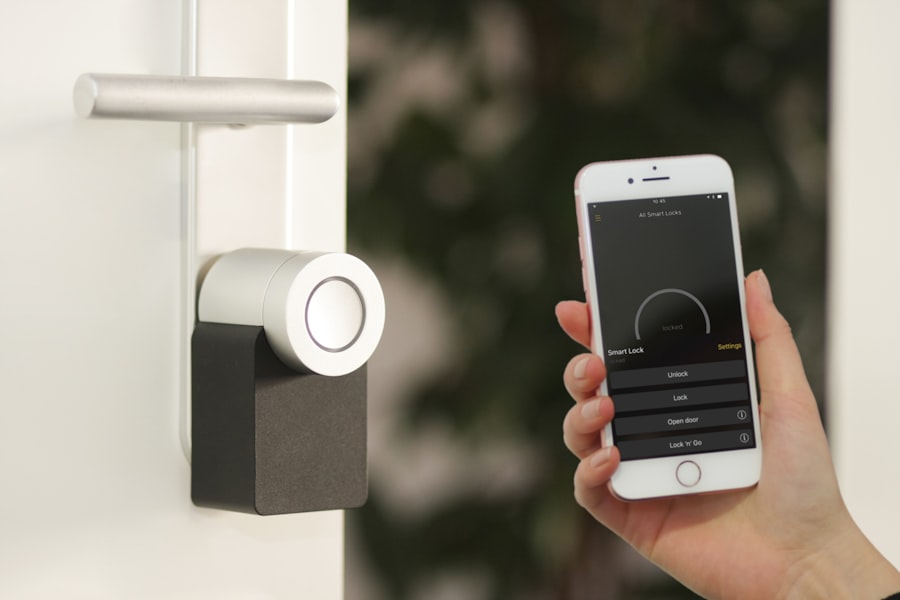
5. A Video Doorbell — Closes the “Doorbell Test” Loophole
The doorbell test is exactly what it sounds like: a burglar rings your bell to check whether anyone is home before proceeding. A dog sign implies a dog will bark when they ring. If it doesn’t, the sign is disproved. A video doorbell closes this loophole completely — you can answer the doorbell from your phone while you’re at work, making it appear someone is home when they’re not. Two-way audio lets you speak directly to whoever rang the bell, which is functionally indistinguishable from answering the door.
The Ring Video Doorbell Wired is the straightforward option — wired to your existing doorbell power, 1080p video, two-way audio, motion zones, and optional Ring monitoring. For apartments or homes without existing doorbell wiring, battery-powered alternatives like the Blink Video Doorbell work without any wiring at all.
Ring Video Doorbell Wired
Answer your doorbell from anywhere on your phone. Two-way audio makes it sound like you’re at the door. Motion detection alerts you before anyone rings — closing the reconnaissance window even further. Works with existing doorbell wiring in under 30 minutes.
→ Check Price on AmazonWhat the Sign Does Right — And How to Use It Correctly
The “Beware of Dog” sign isn’t useless. It has legitimate deterrence value against the most impulsive, least sophisticated opportunistic burglars — the ones who are genuinely deterred by any visible signal at all. According to the research on what actually deters burglars, roughly 41% of burglars act on impulse rather than planning. For that cohort, any visible signal of friction — sign, camera, alarm sticker — may be enough to redirect attention to an easier target.
The problem is the other 59%. For burglars who apply even basic target evaluation — which includes the majority of residential break-ins — a sign needs backup to be credible. The backup doesn’t need to be expensive. A driveway motion alarm ($40), a tabletop camera pointed at the front door ($36), and the electronic barking dog alarm ($40) together cost about $120 and together produce what the sign alone promises: a property that responds to approach.
❌ Sign Alone (What Most People Do)
- Static — doesn’t respond to approach
- Testable — doorbell ring disproves it
- No evidence generation
- Implies bluff to experienced burglar
- No occupancy signal when house is empty
✅ Sign + Supporting Setup (What Works)
- Electronic bark alarm responds to motion
- Driveway sensor alerts you before doorbell
- Camera you answer remotely confirms occupancy
- Motion light removes concealment at night
- Every signal is live, triggered, and real
If You Want to Go Further: Physical Security First
Deterrence signals — signs, cameras, alarms — redirect opportunistic burglars to easier targets. But a determined burglar who decides to proceed needs to meet physical resistance, not just deterrence signals. The most important physical upgrade in any home is the door frame, not the lock. Standard residential door frames fail under a single kick in under 10 seconds. A reinforced strike plate with 3-inch screws anchored into the wall stud — or a full door reinforcement kit — changes entry time to several minutes, which is beyond what most burglars will attempt.
We covered this in detail in our post on the $47 door reinforcement kit that outperforms a $300 camera. The short version: cameras document entries, reinforced frames prevent them. Both matter. Do the frame first.
Door Armor MAX 5-Piece Door Reinforcement Kit
Reinforces all three failure points in a standard residential door — the jamb (where the frame splits), the door edge (where it splinters), and the hinges (where force redirects). Installs in 30 minutes with a drill. One-time cost, permanent protection.
→ Check Price on AmazonThe Practical Takeaway
Keep the sign if you want. It’s not hurting anything, and for some portion of would-be burglars, it’s enough friction to redirect them. But treat it as one signal in a layered setup — not as a strategy on its own. The most effective home security setups work at multiple levels: they signal monitoring before anyone reaches the door (driveway alarm, visible camera), they respond dynamically to approach (video doorbell you answer remotely, electronic bark alarm), and they create physical resistance if deterrence fails (reinforced door frame, entry sensors that alert immediately on breach).
A sign that says “Beware of Dog” without a dog is hoping a burglar doesn’t test it. Every product above removes the need to hope.
✅ The Complete Setup That Backs Up Your Sign
- Electronic barking dog alarm (~$40) — Makes the sign true: motion triggers realistic barking sounds. Solar-powered, no wiring.
- Wireless driveway alarm (~$40) — Alerts you before anyone reaches the door. Chime inside, no subscription.
- Video doorbell (~$60) — Answer the doorbell remotely. Closes the “doorbell test” completely.
- Visible outdoor camera (~$70) — The deterrent 60% of burglars said would make them skip the property.
- Surveillance yard sign (~$18) — Honest signage pointing to the cameras you actually have installed.
- Door frame reinforcement (~$47) — Physical resistance for anyone who makes it past the deterrence layer.
- Total: ~$275 — A complete, layered setup that turns a passive sign into a credible security signal at every level.
SafeNestGuide.com participates in the Amazon Associates Program. Links in this post are affiliate links — we earn a small commission if you purchase through them, at no extra cost to you.